Founder, The Language Blueprint LLC
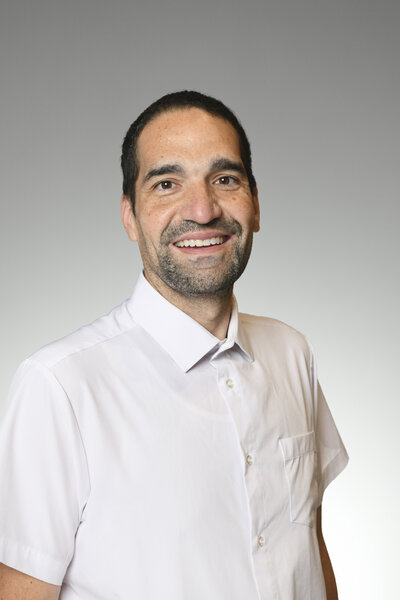
My first job in language education had no title. I'm the son of a single immigrant mother, and I grew up learning English and Spanish at home while teaching her English: translating at appointments, decoding paperwork, serving as her cultural broker long before I had a word for it. I saw up close what it costs when language stands between a person and full participation in their own life. The Language Blueprint exists for kids who were like my mom.
I teach secondary multilingual learners in New York: newcomers and Students with Limited or Interrupted Formal Education (SLIFE), the students most schools are least prepared to serve. My classroom is where second language acquisition theory meets a bell schedule. I teach integrated ENL/ELA to grades 9-12, designing sheltered instruction that gives students at the earliest stages of English real access to grade-level texts and ideas, along with a genuine pathway to the NYS English Regents and graduation. And because what students read matters as much as how, I build curriculum around culturally and linguistically sustaining literature, so my students meet their own languages, communities, and experiences on the page.
My research in applied linguistics and literacy education starts from an uncomfortable observation: the field's dominant theories of reading, vocabulary, and assessment quietly assume a print-literate learner, an assumption SLIFE students specifically do not share. I'm working through what vocabulary development, reading comprehension, and valid assessment look like when that assumption is removed. At the center of this work is a reconceptualization of reading comprehension for SLIFE, and a clear account of what that reconceptualization needs to translate to in technology designed for multilingual learners who are SLIFE. The same lens shapes my daily practice, where I design construct-valid classroom assessments and challenge the measures that put construct-irrelevant barriers in front of multilingual learners and students with disabilities.
I designed The Reading Blueprint, an AI-powered reading tool built from the ground up for learners without assumed print literacy, the users most edtech quietly designs out. It pairs multimodal scaffolds with vocabulary supports mapped directly to acquisition theory, and treats students' full linguistic repertoires as assets rather than interference. It's a classroom tool and a research instrument in one, with formal validation studies of its effects on SLIFE students' reading comprehension anticipated in the future.
The students hardest to serve with off-the-shelf tools deserve the best-designed ones. That conviction connects my classroom, my research, and my code. It's why I founded The Language Blueprint LLC, and it all comes back to equity of access: to literacy, to language, and to the futures both make possible.
Let's connect if you're working on multilingual education, literacy and reading instruction, or AI in the language classroom.
Partner Educator, The Language Blueprint LLC
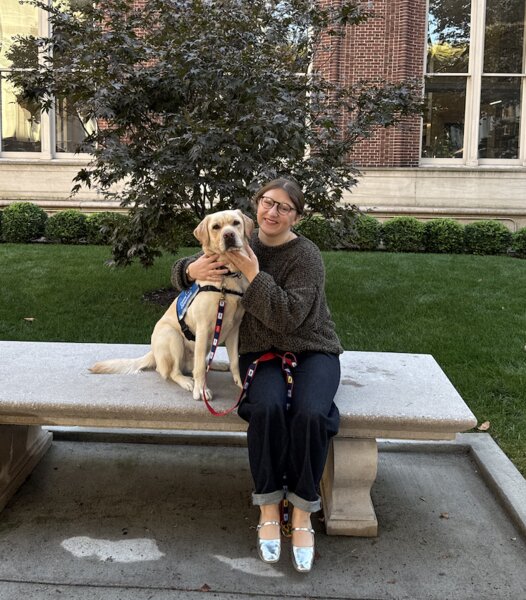
I grew up on a small island off the coast of Yarmouth, Maine, with four siblings and many dogs. Becoming deaf by age 14 shaped my passion for education. I want to show other students that adversity doesn't have to limit their dreams. At 17, I spent a year teaching English in Spain, a transformative experience that launched a decade-long commitment to English language learning and ELL instruction. My work centers on equity and linguistic justice. I believe every student deserves to see their language variations valued, not erased, as they build community and confidence. I earned my M.A. to deepen this mission, and I wrote Identity in Second Language Learning and Critical Language Awareness: The Effects of Language Learning on Power, Identity, and Linguistic Capital, inspired by my thesis at Columbia, to amplify these ideas. After spending three years in Spain and two in New York City, I have returned to Maine with my hearing service dog, Trooper, to continue to advocate for multilingual learners and the communities they are part of.
I teach Spanish and English Language Learning (ELL) at a boarding school in Bath, Maine, serving students in grades 9 through postgraduate. In my classroom, I foster curiosity, encourage students to challenge themselves and one another, and create opportunities for growth by embracing the diverse cultures and communities represented both inside and outside the classroom. My Spanish classes invite students to explore the richness and diversity of the Spanish-speaking world — not only in Spanish-speaking countries, but also within the United States and their own communities. Through language and culture, students develop the skills and perspectives needed to become confident, globally minded multilingual learners. In my ELL classroom, I dedicate my time to helping students strengthen their reading, writing, speaking, listening, and conversational skills while building confidence in their English language development. I create an authentic, student-centered environment where questions are welcomed, mistakes are embraced as part of the learning process, and every student feels respected and supported. Together, we explore not only the English language but also the cultural nuances, traditions, and everyday experiences that shape communication in English-speaking communities.
My research has focused on second language acquisition, multilingualism, language assessment, and educational equity. I was particularly interested in how language, culture, and identity shaped the educational experiences of multilingual learners. My work included qualitative and quantitative research on language assessment, diversity and inclusion, early language development, and bilingual education. Through research experiences at Teachers College, Columbia University, Colby College, and in Sevilla, Spain, I conducted interviews, surveys, classroom observations, literature reviews, and data analysis in both English and Spanish. My research sought to bridge theory and practice by informing equitable, culturally responsive approaches to language teaching and learning.
Partner Educator, The Language Blueprint LLC
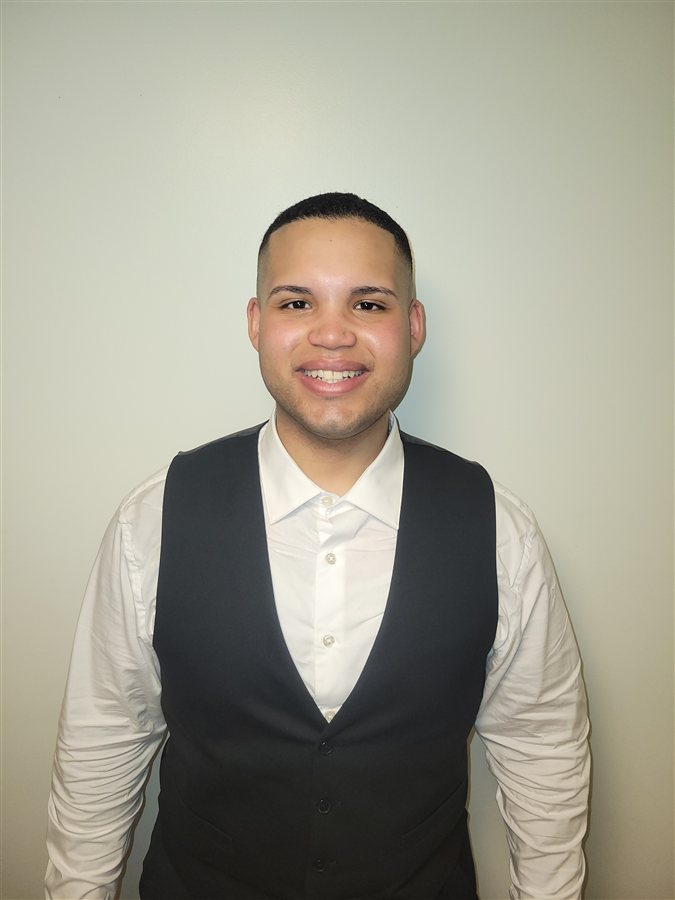
I was born in Ponce, Puerto Rico, and grew up in the South Bronx, where language, culture, and identity were part of everyday life. My path as an educator has taken me from teaching English in Japan to bilingual special education in New York City and, eventually, to Central Islip, where I teach bilingual elementary students and Adult ESL learners.
Over more than two decades in education, I have worked across age groups, language backgrounds, and learning needs. That range has shaped how I think about teaching, technology, and the kinds of support that help learners grow without taking over the thinking they need to do for themselves.
I teach second grade in a bilingual setting and Adult ESL in Central Islip, New York. Earlier in my career, I taught bilingual special education in New York City and English in Japan to learners ranging from children to advanced adults.
My classroom work connects language development, literacy, STEM, social studies, technology, and inquiry. Across those settings, I want learners using language to explain what they notice, defend ideas, solve problems, revise their thinking, and make meaning.
My work in computer science begins with a simple idea: computer science education does not always begin with code.
Sequencing, pattern recognition, debugging, problem solving, and revision already happen across everyday classroom learning. I serve as an Elementary Representative with CSTA New York and have also contributed as a CSTA PK–12 Standards Reviewer. My writing in this area explores how teachers can recognize and make computational thinking more visible across subjects.
My published work explores bilingual education, multilingual literacy, news literacy, computer science, classroom technology, and AI in education. My writing has appeared through Society & AI, McGraw Hill, eSchool News, CSTA, and Hello World.
Across that work, I keep returning to the same question: how can technology support thinking without replacing human judgment?
I use a framework called Diagnose, Draft, Calibrate, or DDC, to guide AI use with teachers and learners.
Diagnose means thinking first. Draft is where AI can support the work. Calibrate is where the human evaluates, revises, questions, and makes the final decision.
The goal is simple: AI can support different parts of our thinking, but it should not replace the judgment behind the work.
Bilingual education, Adult ESL, literacy, computer science, AI literacy, and instructional design may look like separate areas, but for me they connect through one idea: teachers are architects of thinking.
The work is about designing the conditions in which learners can access ideas, struggle productively, communicate, revise, and grow.
Our greatest asset has never been technology. It is how we think.